
Naughty Robotcat
This project explores the potential of animal therapy robots, inspired by interactive companions such as PARO(http://www.parorobots.com/)
The Naughty Robotcat was designed as a playful companion that provides moments of relaxation and enjoyment in everyday environments.
The project focuses on understanding how playful interactions can capture attention, create emotional connections, and shape a positive user experience. By combining technology with a friendly and approachable character, the Naughty Robotcat demonstrates how creative concepts can be used to engage audiences and communicate an idea in an accessible and memorable way.
Aim
Robotic Arms Study
Therapeutic Robot
Human Robot Cooperation

Concept
The Naughty Robotcat is an interactive experience designed to create playful and unexpected moments within an everyday work environment. The interaction combines a robotic arm, an Arduino-connected touch sensor, Processing, and a plush cat paw attached to the robot.
When a participant interacts with the touch sensor while completing their tasks, the robot responds with one of two pre-programmed movements. The interaction creates a playful exchange between the participant and the robot, turning a familiar environment into a more engaging and memorable experience.
From a communication and audience-engagement perspective, the project explores how interactive elements can capture attention, encourage participation, and create an emotional connection through humor and surprise. The Naughty Robotcat demonstrates how a simple physical interaction can be transformed into an approachable and engaging experience through creative technology.engaging experience through creative technology.

Part 1. Character & Visual Design
The first step focused on transforming the robotic arm into a recognizable cat paw. Using laser cutting techniques and acrylic craft felt, a glove-shaped attachment was designed and fabricated to create a soft and approachable appearance.
The visual transformation helped shift the robot from a technical object into a more familiar and playful character.
This process explored how physical design and visual details can influence how an audience perceives and connects with an interactive object.


Part 2. Audience Interaction & Engagement
To encourage audience participation, a touch sensor was incorporated to trigger the robot's movements. The Arduino was placed underneath the table, while the sensor was concealed beneath the surface, allowing the interaction to remain subtle and unexpected.
This setup created a simple cause-and-effect interaction: touching the hidden sensor would trigger a response from the robotic cat. The element of surprise was used to make the experience more playful and encourage curiosity and engagement.


Part 3. Visual Storytelling & Experience Design
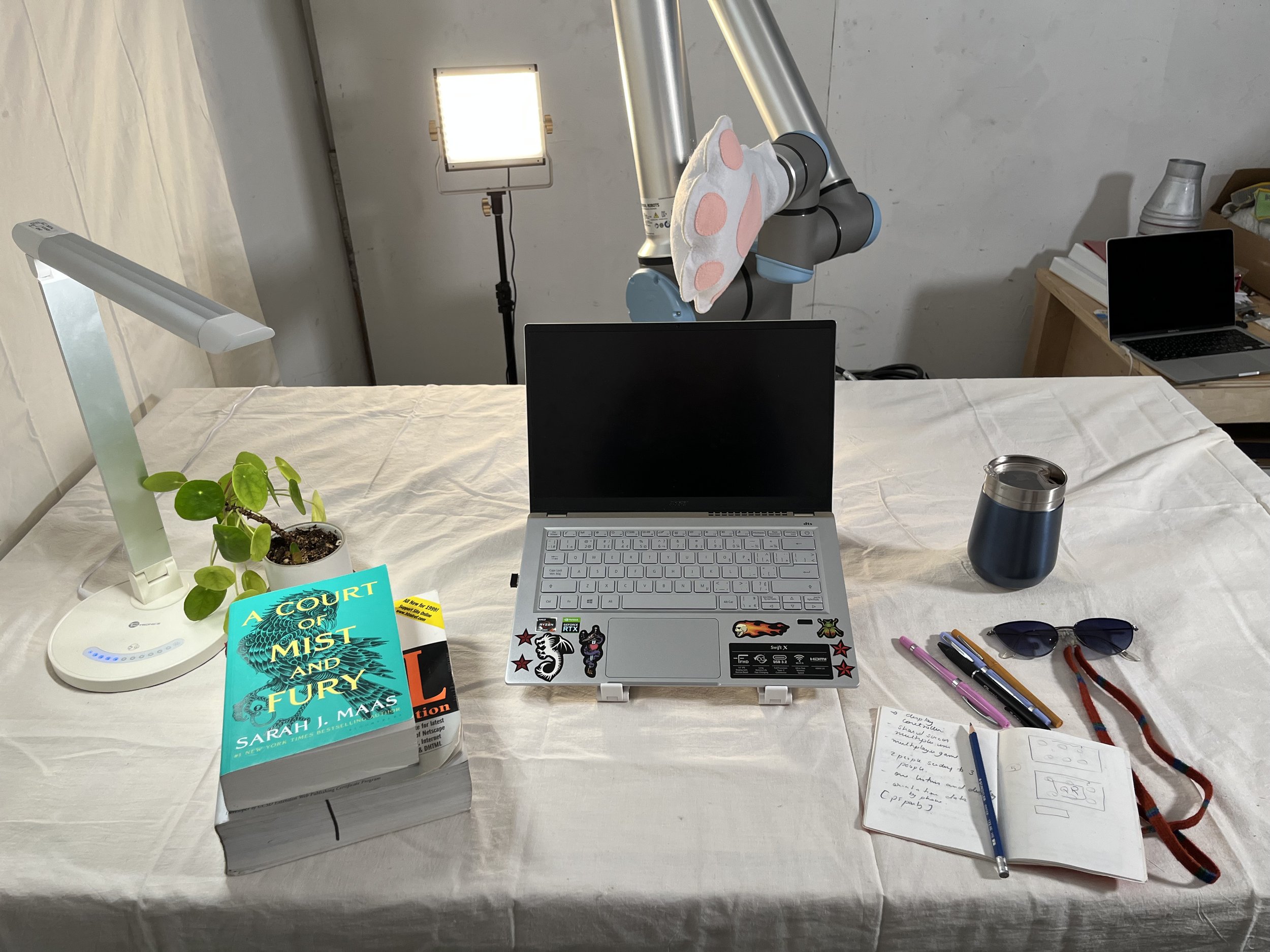
The final stage focused on creating a familiar workspace environment to communicate the concept visually. A participant was positioned at a desk while the robotic cat was integrated into the scene, replacing the role of a real pet.
Through the combination of visual storytelling, familiar surroundings, and playful interaction, the project aimed to create an experience that felt approachable and relatable.
The scene also demonstrated how context and presentation can shape an audience's understanding of an interactive concept and make a technology-driven experience feel more human and engaging.


Part 4. Interaction Scenarios & Creative Development
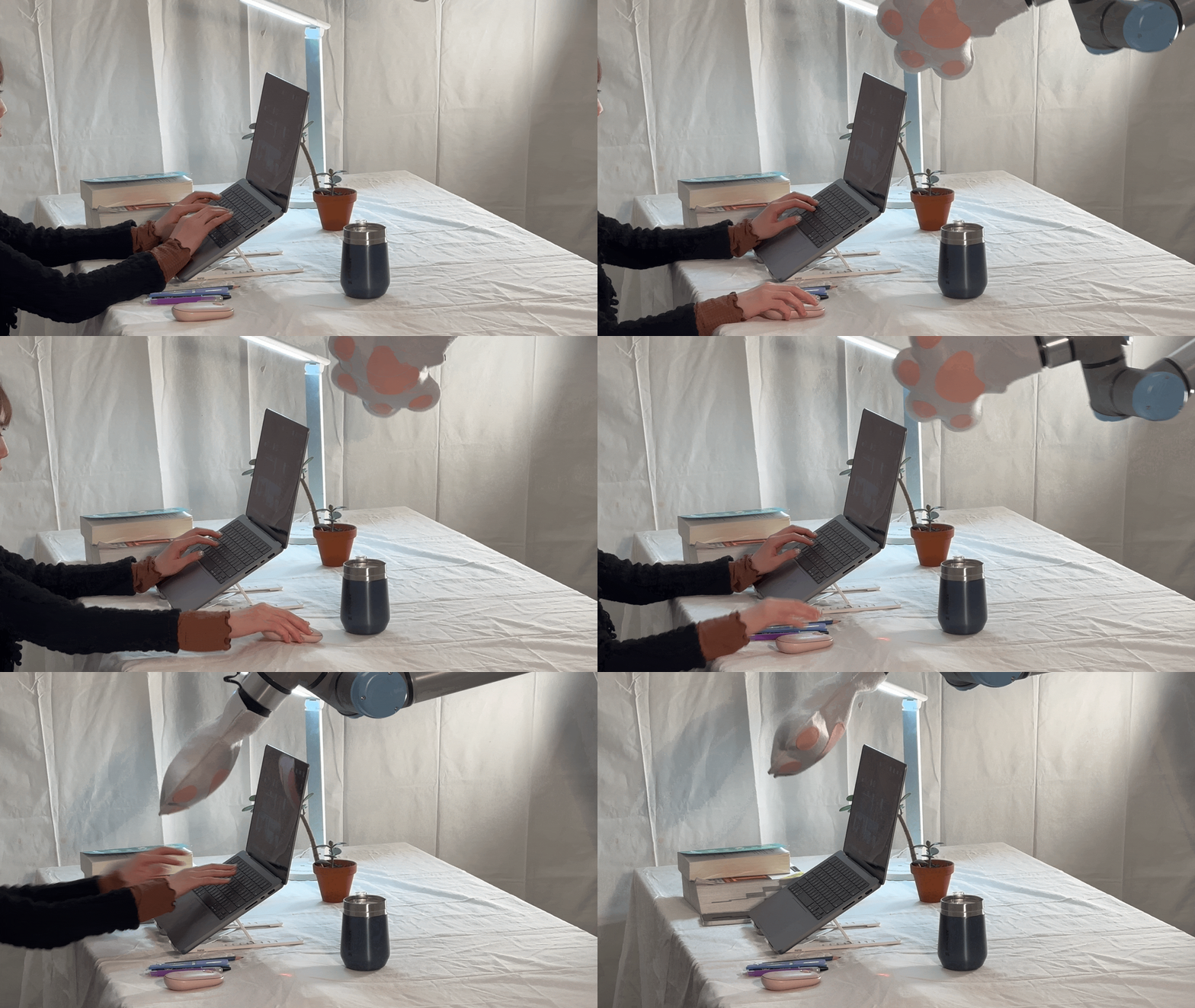
The next stage focused on developing a series of playful scenarios based on familiar cat behaviors. The robotic arm was programmed to perform unexpected and mischievous movements, creating moments of surprise and encouraging interaction with the participant.
Scenario 1. Unexpected Disruption
A simple everyday moment: drinking water while working, was transformed into an unexpected interaction.
A cup was placed on a sensor, and once triggered, the robotic arm quickly moved toward the cup, mimicking a cat playfully knocking it over.
The unexpected response was designed to capture attention and create a humorous moment within an otherwise routine activity.


Scenario 2. Attention Seeking
This scenario explores the idea of a cat demanding attention while someone is working. When the participant places a bottle on the surface, the interaction triggers the robotic arm to reach toward the screen, interrupting the participant's activity.
The playful interruption creates a familiar and relatable situation while encouraging the participant to respond to the robot.

Scenario 3. Playful Companion
The final scenario introduces a plush toy as a new companion for the participant. The robotic cat interacts with the toy through a playful patting movement, creating a humorous narrative around the relationship between the robot, the participant, and the toy.
This scenario expands the interaction beyond a simple robot response and uses character, humor, and storytelling to create a more engaging experience.

