
Designing for Audience Engagement
Post- Heavens (2022)
This project explored how interactive technology and visual design could be used to create an immersive audience experience. Using a Kinect sensor, projection, and TouchDesigner, the project created an interactive environment where audiences could actively engage with and influence the visuals. Reflective materials, such as mirrors and silver-colored paper, were also incorporated to enhance the visual impact of the space.
The project considered how spatial layout, lighting, and interactive elements could capture attention and encourage audience participation. This approach demonstrates how thoughtful experience design can create meaningful engagement between an audience and a creative environment.
Concept
Perception is shaped by where we stand. When we remain in one position, it is easy to see ourselves as the center of the world. However, movement allows us to shift our perspective and recognize that we are only a small part of something much larger.
Our understanding of the universe has evolved in much the same way. As discoveries revealed that our galaxy is only one among countless others, our perception of our place in the universe continued to expand. Yet, in everyday life, we often remain attached to a fixed point of view, seeing the world primarily through our own position and experience.
This work challenges that limited perspective through an immersive and interactive experience. Rather than simply observing the work, participants are invited to move through the space, interact with the environment, and experience how their position can influence what they see. Visual elements and interactive technology transform movement into an active part of the experience, creating opportunities for discovery and exploration.
By inviting the audience to actively participate, the work creates opportunities for curiosity, engagement, and new perspectives. It explores how changes in physical and conceptual position can influence the way audiences perceive and experience their surroundings.
Visual Design- TouchDesigner
TouchDesigner was used to build a responsive, universe-inspired visual environment designed around audience interaction. Particle systems create an immersive digital space, while mouse and webcam inputs allow participants to influence the visuals in real time.
The system also supports external devices, creating opportunities to expand the interaction beyond the screen. This approach combines visual design, interactive technology, and real-time responsiveness to create a more engaging and participatory audience experience.


Collaborative Experience Design
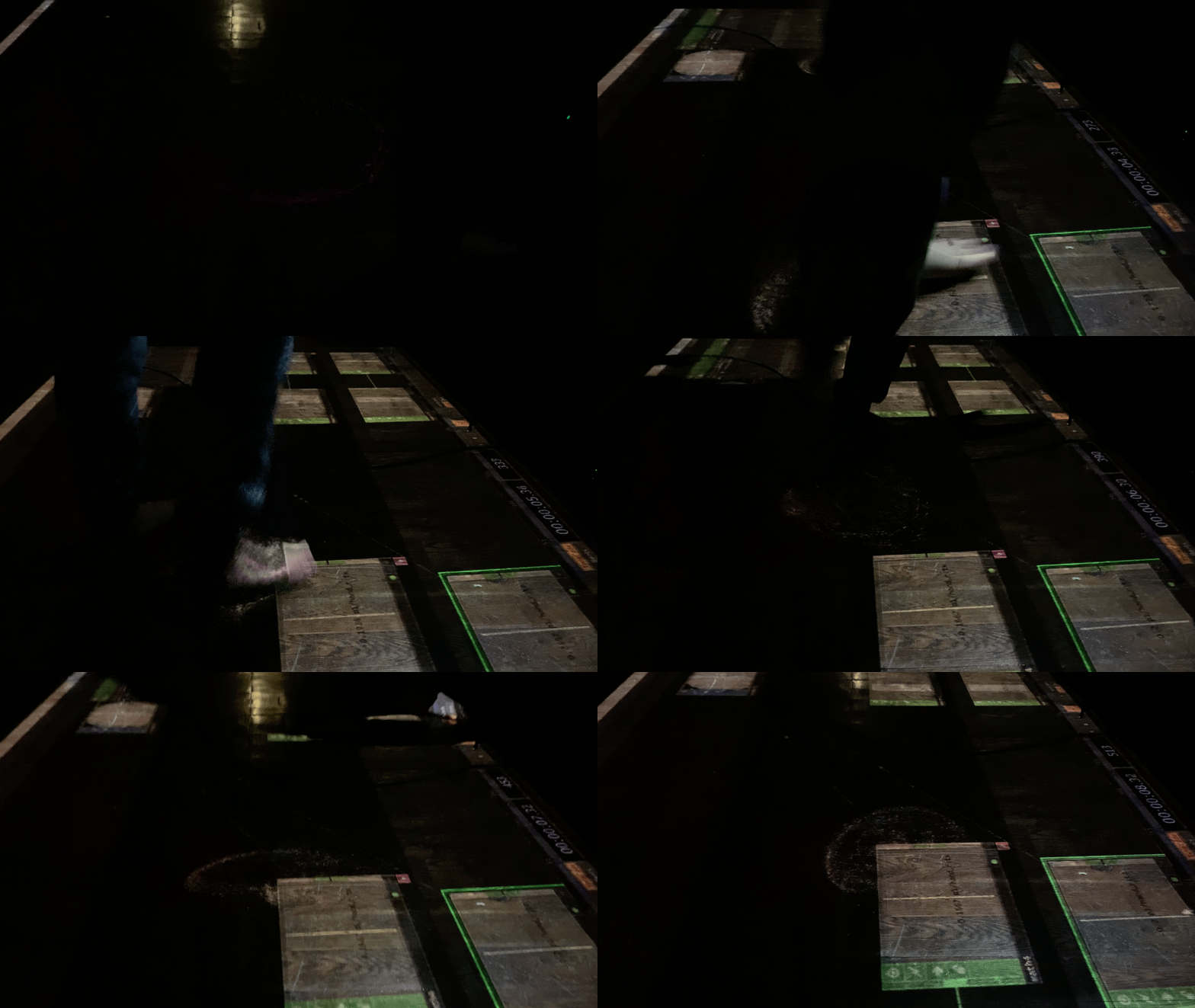
After completing the visual design in TouchDesigner, another important step was designing and setting up the physical environment. The goal was to create an immersive space that encouraged audience participation. The space was carefully selected and mapped out through sketches and layout plans to determine the placement of the installation and interactive elements.
The setup also involved team coordination, including planning the physical layout, organizing the installation process, and conducting rehearsals.
This collaborative process helped ensure that the visual, technical, and interactive elements worked together to create a cohesive audience experience.


Site Planning
After completing the design and rehearsal phase, the project moved into the final site setup and testing stage. The space was evaluated to determine how the Kinect sensor, projector, and interactive visuals could be positioned to create an engaging and seamless user experience.
Key considerations included:
Positioning & Alignment: The projector and Kinect sensor were carefully positioned and aligned with the intended projection surface and interaction area. Adjustments to distance, height, and projection angle were made to optimize visual quality and tracking range.
Testing & Calibration: The complete setup was tested on site to ensure that the visuals, interactive elements, and connected devices functioned as intended. The Kinect system was calibrated to improve tracking accuracy and responsiveness, while the projection was adjusted to support a smooth and engaging interactive experience.


Audience Engagement
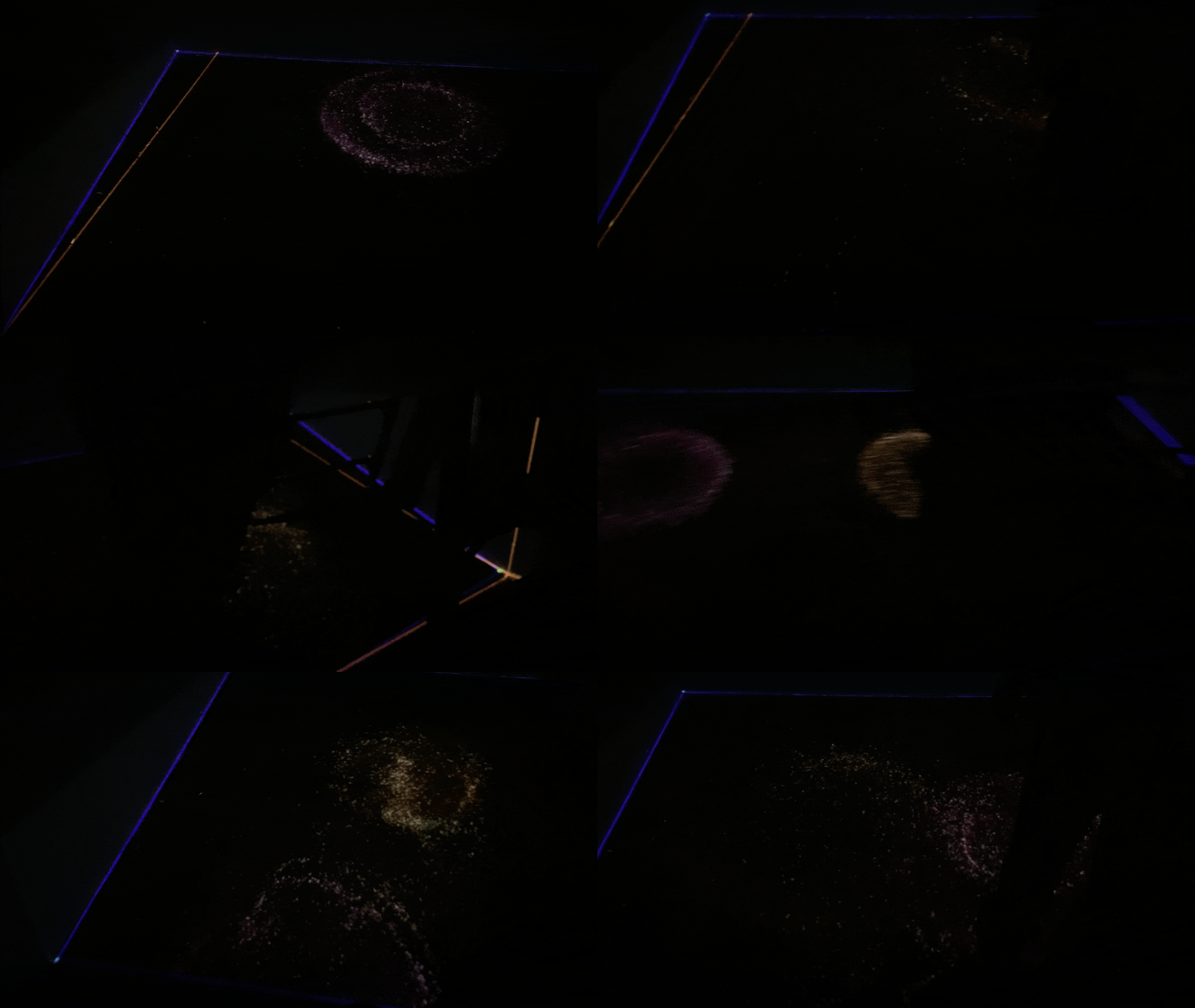
The interactive experience generated strong audience engagement, with participants actively moving through the space and responding to the environment through running, jumping, and physical interaction. This level of participation demonstrated how interactive design could transform the audience from passive observers into active participants.
An unexpected layer of interaction also emerged through the use of mirrors and reflective materials. Light and visual effects were reflected across the walls, ceiling, and participants' bodies, extending the digital experience beyond the projected surface and into the surrounding environment.
The final experience demonstrated the potential of combining interactive technology, spatial design, and reflective materials to create an engaging and immersive environment that encouraged exploration and spontaneous participation.


Insights & Next Steps
The project brought together concept development, visual design, spatial planning, and interactive technology to create an immersive audience experience. Testing the experience with participants provided valuable insights into how people interacted with the space and responded to the visual elements.
These observations highlighted the importance of designing with audience behavior in mind and using real-world feedback to refine interactive experiences. The process strengthened an understanding of how thoughtful planning, collaboration, and iterative testing can contribute to more engaging and effective experiences.
Sound design
The initial concept explored using sound effects that responded to human movement to create an additional layer of interaction. While the technical interaction performed well, testing revealed that the sound experience did not fully align with the visual direction or the intended audience experience.
This process highlighted the importance of evaluating interaction beyond technical performance. Effective experience design requires visual, audio, and interactive elements to work together while also considering how the overall experience feels from the audience's perspective. The insight informed future design decisions by emphasizing stronger alignment between concept, sensory elements, and audience response.

Challenge & Problem-Solving
The initial concept involved creating a brightly lit environment to give participants the sensation of floating through space. During the setup process, however, the available projectors were not suitable for the space or the intended visual effect. The approach was adapted by using a single projector positioned to project directly onto the floor.
A second challenge involved accurately tracking participant movement and synchronizing the interactive visuals with their position. The initial sensor placement caused inconsistencies in tracking—for example, movement to one side could trigger visual responses in the opposite direction. Calibrating the system and identifying the source of the tracking issue required extensive testing.
Through iterative testing, relocating the sensor significantly improved tracking accuracy and alignment between participant movement and the visual response.
This process demonstrated the importance of adapting the original approach, testing different configurations, and solving technical challenges based on the actual conditions of the space.
